
Achieving IPTV without buffering is the number-one priority for anyone who wants a truly satisfying home entertainment experience in 2026. Whether you are winding down with a primetime drama or rooting for your team during a high-stakes live match, that dreaded spinning circle can turn a great evening into a frustrating one in seconds. The reality is that reaching a state of genuine IPTV without buffering demands more than just fast internet; it requires a carefully tuned ecosystem of hardware, software, network configuration, and — most importantly — a quality IPTV subscription from a trustworthy source. This guide walks you through every single layer of that ecosystem, from the ground up, so you can stop tolerating interruptions and start enjoying every second of your content. By the time you finish reading, you will understand exactly why some setups freeze constantly while others deliver true IPTV without buffering, and you will have the actionable knowledge to place yourself firmly in that second camp.
Table of Contents
The Foundation: Why Your IPTV subscription Matters More Than You Think
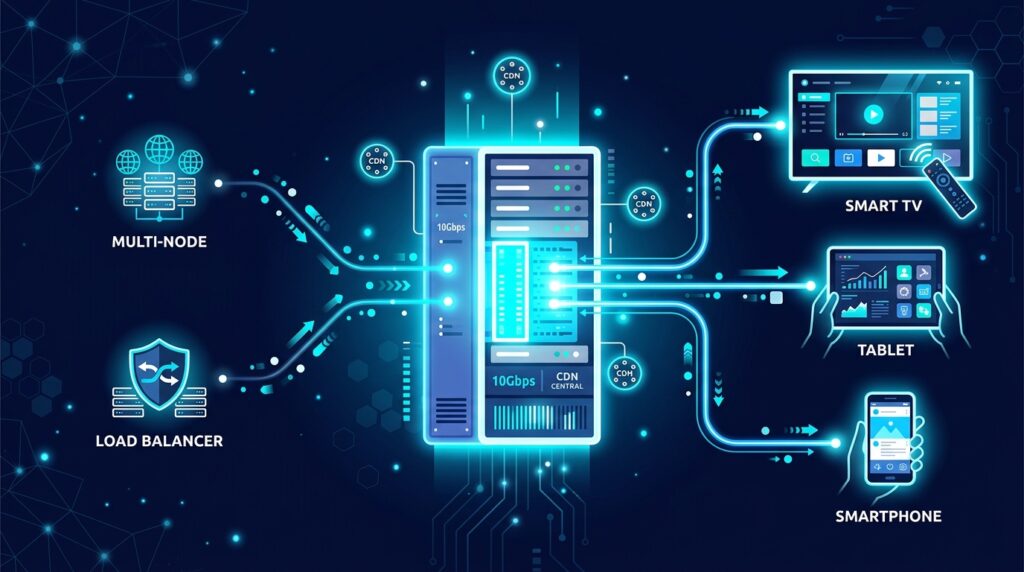
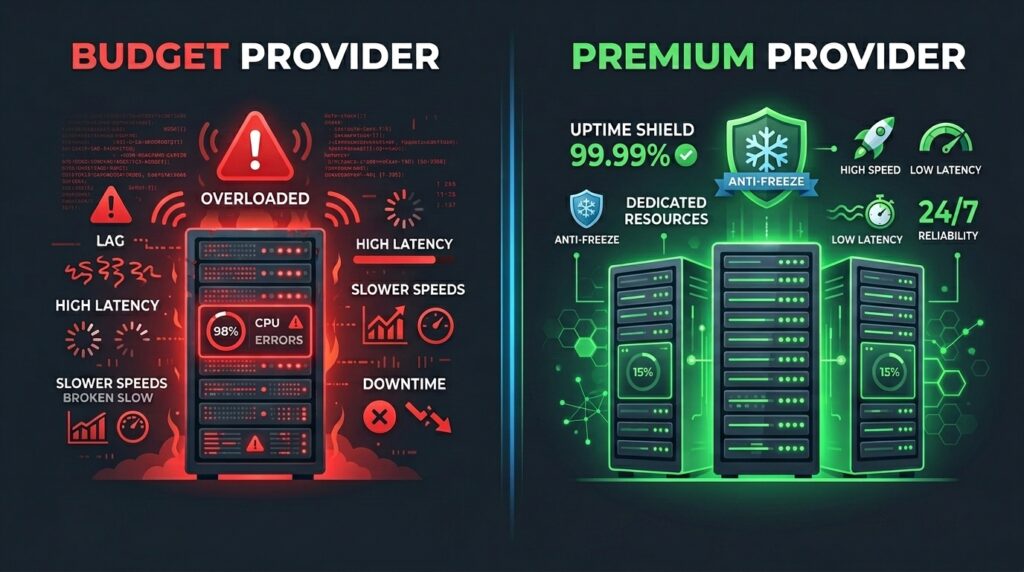
Most people assume that buffering is a network problem and nothing else. In practice, the single largest variable in your streaming experience is the quality of the IPTV subscription itself. Budget providers frequently pack thousands of users onto a handful of shared servers. When demand spikes — during a championship final or a globally anticipated pay-per-view event — those servers buckle, and every subscriber on the same node experiences lag, frame drops, and outright disconnections.
A premium IPTV subscription is built on an entirely different architecture. Reputable services invest in distributed Content Delivery Networks (CDNs) that spread traffic load across dozens of geographically dispersed nodes. Automated load balancers continuously monitor each gateway, and the moment one node approaches its capacity ceiling, your traffic is silently redirected to a fresher, less-congested server. From your side of the screen, you never notice the switch — which is exactly the point.
Another critical differentiator between a cheap IPTV subscription and a premium one is protocol support. Legacy M3U playlists are static files that your player must constantly re-parse, which places an unnecessary burden on your device’s RAM and processor. A modern IPTV subscription built on the Xtream Codes API handles data delivery dynamically, syncing channel lists and EPG data far more efficiently. If your current IPTV subscription only offers an M3U link with no API option, you are already leaving performance on the table.
Finally, look for a IPTV subscription that includes a multi-connection allowance. This means separate streams can run on your TV, your tablet, and your spouse’s phone simultaneously without any of them competing for the same server bandwidth allocation. Providers that restrict you to one simultaneous connection on a shared pipeline are the ones most likely to cause buffering the moment a family member starts watching something in another room.
Choosing the Right IPTV provider: What Separates the Best from the Rest
Your IPTV provider is the backbone on which your entire entertainment setup rests. A high-quality IPTV provider does not rely on reseller lines that pass through three or four middlemen before the stream reaches your device. Instead, they operate on private, bare-metal servers housed in tier-one data centers, ensuring that uptime stays consistently above 99.9% even when global demand is at its highest.
One feature you should always ask your IPTV provider about is anti-freeze technology. This is a server-side mechanism that pre-buffers segments of the stream on the provider’s infrastructure before sending them to your device. The result is a smoother playback experience even when your local network experiences brief fluctuations. The best providers activate anti-freeze automatically during high-demand events — think international tournaments, season finales, or pay-per-view nights — so you never have to configure anything manually.
A reliable IPTV provider also keeps its Electronic Program Guide (EPG) data refreshed in real time. An outdated EPG is a subtle but serious sign that a provider is cutting corners on server maintenance, and corners cut on the EPG almost always mean corners cut on stream stability, too. Before committing to any long-term plan, always take advantage of a free trial period to evaluate server responsiveness, channel-switching speed, and overall stability at different times of day.
When selecting your IPTV provider, pay attention to round-the-clock customer support. Streaming problems rarely respect business hours. A provider with a live chat that goes dark at 6 PM on weekdays is not a provider you want managing your Saturday night sports viewing. Premium services like Bamo TV 8K distinguish themselves precisely by combining advanced server infrastructure with responsive, always-available technical support, making them a go-to recommendation for users who want true IPTV without buffering over the long term.
Finding the best iptv player for Your Device
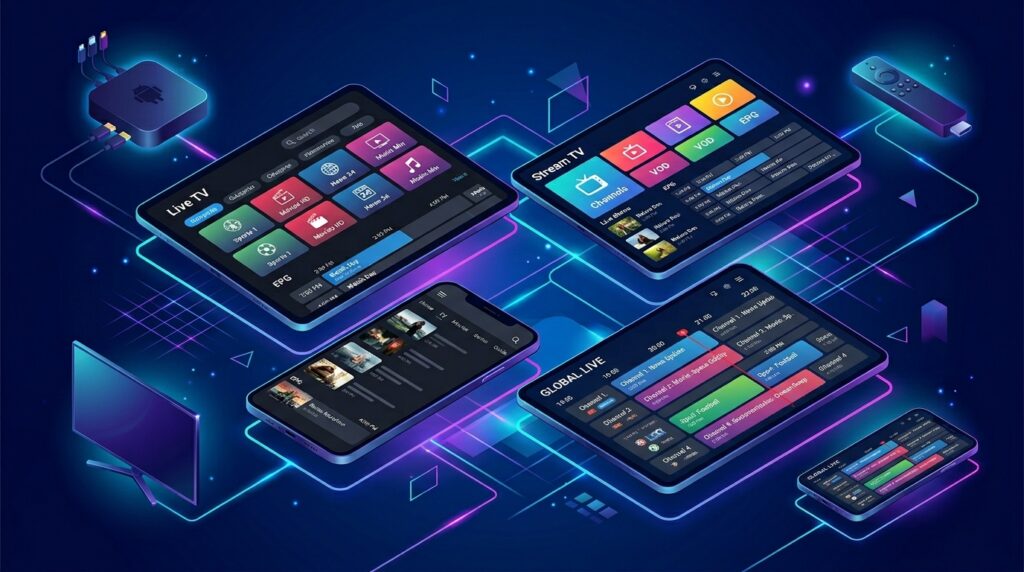
Even with a top-tier IPTV subscription in place, the wrong playback application can become a bottleneck all by itself. Choosing the best iptv player for your specific device is a step that far too many users skip, defaulting instead to whatever app came pre-installed or whatever appeared first in a search. That approach consistently leads to suboptimal results.
For Android-based devices — including Android TV boxes and Fire TV sticks — the TiviMate IPTV Player has earned its reputation as arguably the best iptv player available today. Its interface is polished and intuitive, but what sets it apart under the hood is its granular playback customization. You can manually adjust buffer size, toggle between hardware and software decoding, and even configure how aggressively the app pre-fetches stream data — all settings that directly impact whether or not you experience freezing during playback.
For users on Smart TVs, iOS devices, or mixed households with multiple platforms, IBO Player Pro is consistently cited as the best iptv player alternative. It is engineered for cross-platform stability, maintaining a low memory footprint even on devices with limited processing power. This makes it particularly valuable if you are streaming on a Smart TV that doubles as the household media hub and cannot afford excessive RAM usage from the playback app.
Another strong contender for the title of best iptv player is IPTV Smarters Pro, which has built a global following thanks to its versatility and built-in VPN integration. For users who need to bypass ISP throttling as part of their daily routine (more on that later), having VPN connectivity baked directly into the best iptv player removes the need for an additional third-party app running in the background, thereby freeing up device resources for actual video processing.
Regardless of which best iptv player you choose, make sure it supports Xtream Codes API login rather than requiring a plain M3U URL. The API connection is faster to initialize, more stable over extended viewing sessions, and provides real-time EPG synchronization. Any best iptv player that lacks this feature is already behind the times and will create unnecessary friction between your IPTV subscription and your screen.
How to setup IPTV on Firestick: A Step-by-Step Walkthrough
The Amazon Firestick remains one of the most widely used streaming devices on the market, and for good reason — it is affordable, portable, and capable of running third-party applications that transform it into a fully featured IPTV terminal. However, getting the best performance out of it requires a deliberate setup process.
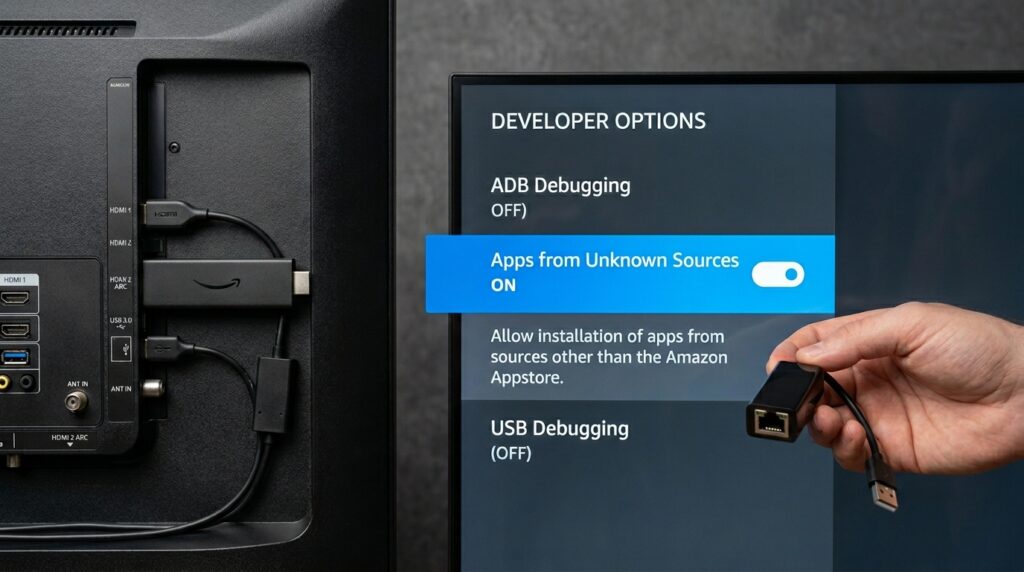
Step 1: Prepare the Developer Environment Before you can setup IPTV on Firestick, you need to unlock the device for third-party installations. Navigate to Settings > My Fire TV > Developer Options and toggle on “Apps from Unknown Sources.” Without this step, the Firestick will block the installation of any APK that does not come from the Amazon App Store.
Step 2: Install the Downloader App The cleanest way to setup IPTV on Firestick is through the Downloader application, which is available directly in the Amazon App Store. Open Downloader, enter the URL for your chosen player’s APK, and the app will handle the download and prompt you through the installation. This method avoids the need to sideload files via a PC or USB drive.
Step 3: Use a Wired Connection One of the most impactful decisions you can make when you setup IPTV on Firestick is to use an Ethernet adapter rather than relying on the built-in Wi-Fi. The Firestick’s wireless antenna is adequate for casual browsing but struggles under the sustained high-bitrate demands of 4K streaming. An Amazon Ethernet Adapter for Fire TV Stick plugs into the Micro-USB power port and delivers a stable, low-latency wired connection that dramatically reduces the likelihood of mid-stream freezes.
Step 4: Log In via Xtream Codes API Once your player is installed and you are ready to setup IPTV on Firestick with your subscription credentials, always choose the Xtream Codes API login option rather than entering a plain M3U URL. Input your portal URL, username, and password as provided by your IPTV provider, and the app will dynamically load your full channel list, VOD library, and EPG guide.
Step 5: Clear the Cache Regularly After a few weeks of use, your player will accumulate cached data that can slow the Firestick down noticeably. Navigate to Settings > Applications > Manage Installed Applications, select your IPTV player, and hit “Clear Cache.” Doing this once a week takes under sixty seconds and keeps the device running at full responsiveness.
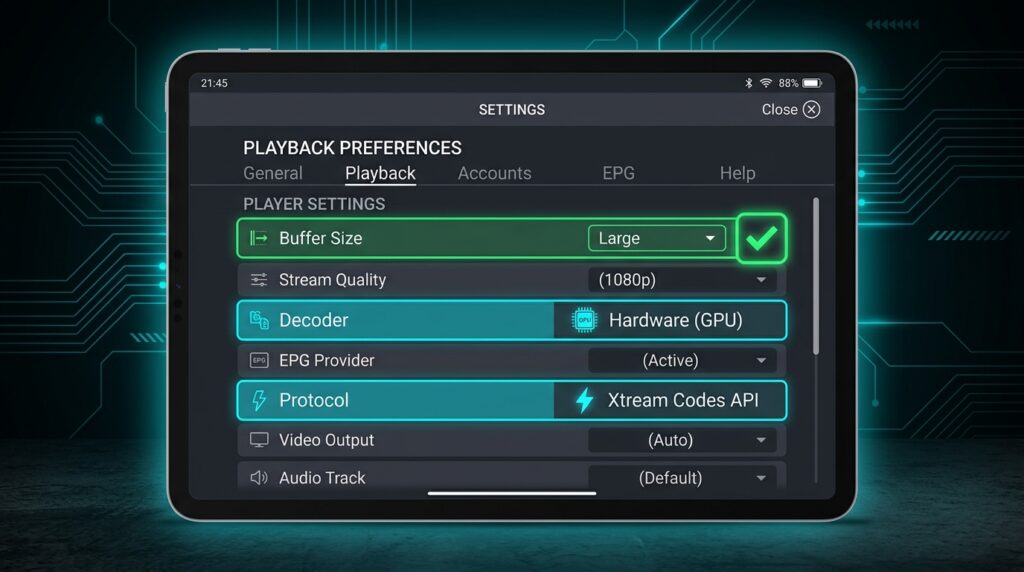
Fine-Tuning App Settings for a Better Best IPTV Service Experience
Even a Best IPTV Service subscription can underperform if your application settings are misconfigured. Here are the three most impactful parameters to adjust inside your player of choice.
Buffer Size In players like the TiviMate IPTV Player, you will find a buffer size option typically listed as Small, Medium, or Large, or as a configurable value in seconds. Setting this to Large gives the application a reserve of pre-downloaded video data to draw from when your connection experiences a brief dip. This reserve — often just three to five seconds worth of content — is sufficient to sail through the minor fluctuations that occur throughout the day without any visible interruption on screen.
Decoder Settings Hardware decoding uses your device’s dedicated GPU to process video data, which is significantly more efficient than forcing the CPU to handle the task through software decoding. For most modern devices, hardware decoding is the correct choice and the primary reason a Best IPTV Service stream feels smooth rather than choppy. That said, some older devices or certain stream codecs are not fully compatible with hardware decoding, which can paradoxically cause more stuttering than software decoding would. If you notice consistent frame-rate issues with a Best IPTV Service on an older device, switching to software (CPU) decoding is worth testing before drawing any other conclusions.
Stream Protocol Within your application’s connection settings, always connect to your IPTV provider via the Xtream Codes API rather than pasting in an M3U link. The API protocol handles stream requests more efficiently, reduces the initial channel-load time, and keeps EPG data synchronized automatically — three factors that collectively contribute to a noticeably smoother experience with any Best IPTV Service.

Why a Best IPTV Service Is a Non-Negotiable Investment in 2026
There is a meaningful difference between an IPTV subscription that merely provides access to channels and a genuine Best IPTV Service that provides a reliably high-quality viewing experience. The distinction comes down to bitrate, server capacity, and support infrastructure.
A Best IPTV Service delivers uncompressed or minimally compressed streams that comfortably support 4K playback. This means your IPTV provider needs to push between 25 and 50 Mbps per channel in sustained throughput — a standard that discount providers rarely meet. When you subscribe to a Best IPTV Service, you will notice an immediate qualitative difference: channels switch in under two seconds, audio stays perfectly synchronized with video, and color accuracy feels closer to Blu-ray than to a pixelated web stream.
A Best IPTV Service will also offer premium features beyond the basics, including Catch-Up TV that lets you revisit content from the past 24 to 72 hours without needing a separate DVR, multi-screen support for simultaneous viewing on different devices, and curated VOD libraries updated daily. These features are not luxuries — they are indicators of a provider that has invested in the full stack of delivery infrastructure rather than just provisioning the minimum viable number of channels.
When you commit to a Best IPTV Service, you are purchasing stability. The peace of mind that comes with knowing your stream will not freeze during the penalty shootout or the season finale is worth far more than the marginal savings you might achieve with a cheaper alternative that lets you down at the worst possible moments.
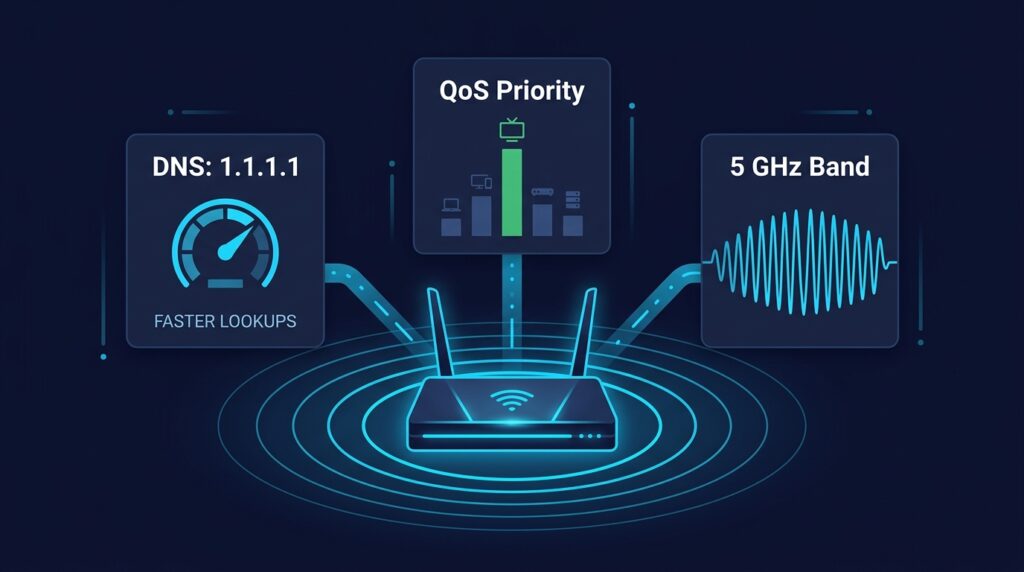
Advanced Network Configuration: DNS and QoS for Persistent IPTV provider Stability
If you have already secured a strong IPTV subscription but are still experiencing occasional lag, the root cause may lie in your router rather than with your IPTV provider. Two router-level adjustments — DNS configuration and Quality of Service settings — can deliver substantial improvements with minimal technical effort.
Changing Your DNS Server Your ISP assigns a default DNS server to your connection, and that server can be sluggish or even used to selectively throttle traffic heading toward IPTV-related domains. Replacing it with Cloudflare’s public DNS (1.1.1.1) or Google’s (8.8.8.8) resolves domain lookups faster and eliminates one avenue through which your ISP can interfere with your IPTV provider connection. This change takes about three minutes in your router’s admin panel and requires no hardware or subscription costs.
Configuring Quality of Service (QoS) If multiple devices in your home share the same internet connection, they compete for bandwidth in real time. A family member beginning a large file download or a video call can instantly starve your IPTV stream of the bandwidth it needs. QoS settings allow you to assign traffic priority by device or by application type. Log into your router’s admin interface, navigate to the QoS section, and set your streaming device to the highest priority tier. This ensures that your IPTV subscription traffic is never deprioritized regardless of what else is happening on the network.
5GHz Wi-Fi Over 2.4GHz If a wired connection is not feasible in your setup, you can still make meaningful progress toward IPTV without buffering by ensuring your streaming device connects to the 5GHz band rather than 2.4GHz. The 5GHz band offers higher throughput and is far less prone to interference from neighboring networks and household devices like microwaves and cordless phones. In dense apartment environments where the 2.4GHz spectrum is thoroughly congested, this single change can make the difference between constant freezing and smooth playback from your Best IPTV Service.
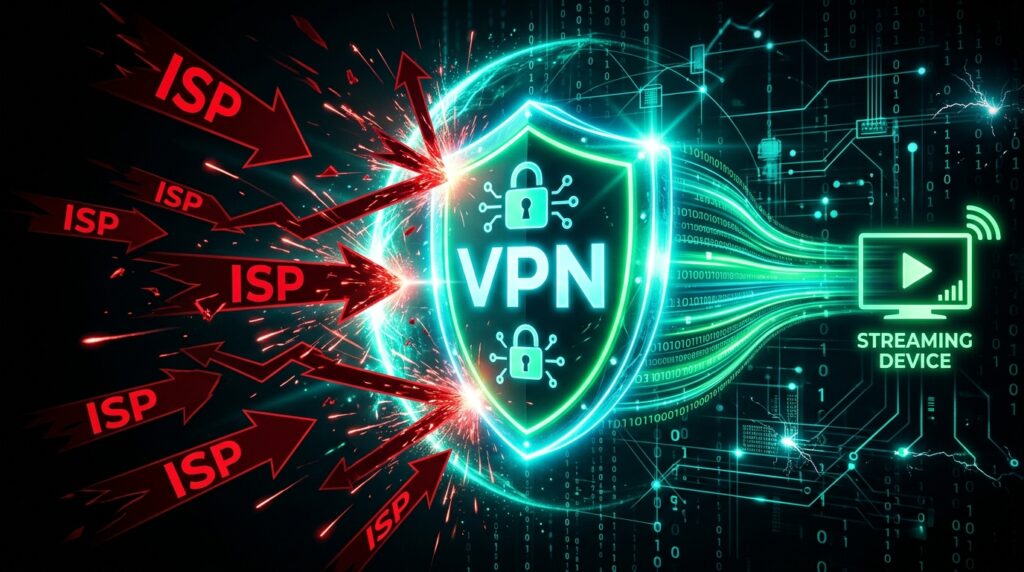
Bypassing ISP Throttling: The VPN Solution for Your IPTV subscription
Internet service providers use a technique called deep-packet inspection (DPI) to monitor the nature of the traffic flowing through their infrastructure. When they detect sustained high-bandwidth streaming activity — particularly during peak evening hours — many ISPs deliberately slow down that traffic to reduce congestion on their network. This is called throttling, and it is one of the most common hidden causes of buffering even when you have a premium IPTV subscription and strong headline internet speeds.
The most effective countermeasure is a high-speed VPN using the WireGuard protocol. WireGuard is significantly faster and more efficient than older VPN protocols like OpenVPN, which means it introduces far less latency overhead. When your streaming device routes its traffic through a WireGuard VPN tunnel, the DPI system sees only encrypted data packets — it cannot identify the destination as an IPTV provider server and therefore cannot apply throttling rules. Your full contracted internet speed reaches the streaming application, and IPTV without buffering becomes achievable even at the busiest time of the evening.
When choosing a VPN for use with your IPTV subscription, select a provider with servers geographically close to your IPTV provider‘s infrastructure. The shorter the physical route between the VPN exit node and the content server, the lower the latency. Also look for VPN services that explicitly advertise streaming support and offer unlimited bandwidth — many budget VPNs impose data caps that are incompatible with extended 4K viewing sessions.
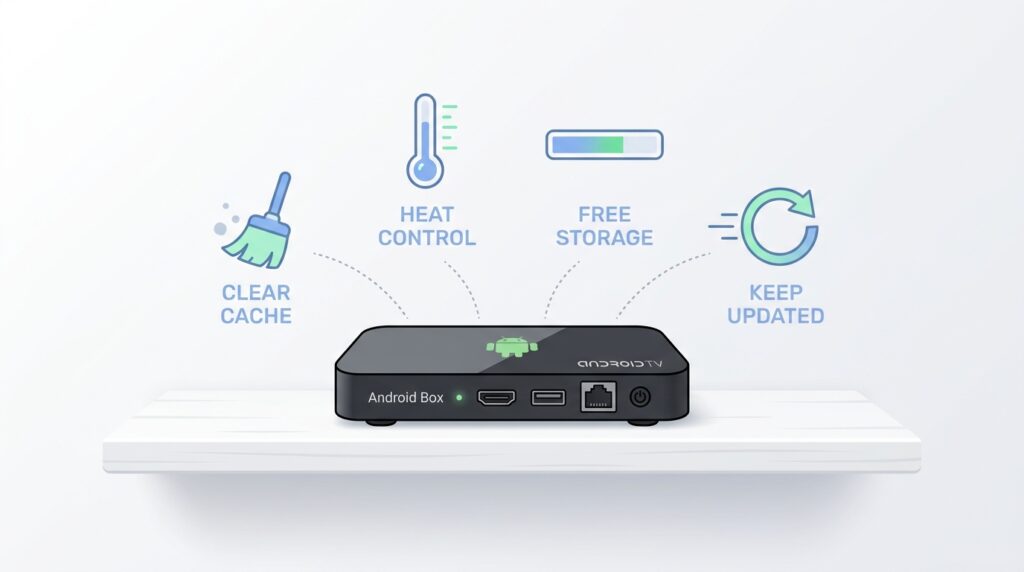
Routine Maintenance: Keeping Your Best IPTV Service Running Flawlessly
Achieving IPTV without buffering is not a one-time configuration task. Like any technology-dependent system, your streaming setup benefits from regular upkeep. Neglecting maintenance is one of the leading reasons a setup that worked perfectly at first begins to degrade over time.
Weekly Cache Clearing Every best iptv player accumulates temporary files — cached channel thumbnails, EPG data snapshots, playback logs — that grow steadily in size. On devices with limited onboard storage, this accumulation can eventually cause the application to stall on startup or freeze mid-stream. Clearing the app cache through your device’s application manager once per week takes less than a minute and reliably prevents this category of performance degradation.
Storage Space Management Your streaming device needs free storage space to function as a proper processing environment. As a general rule, keep at least 15 to 20 percent of your device’s total storage capacity free at all times. This headroom is used by the operating system and your best iptv player to create temporary files during playback. When storage fills beyond 80 to 85 percent capacity, both the OS and the application begin competing for the same limited write space, which manifests as stuttering and delayed channel loads.
Thermal Management Streaming devices generate significant heat during extended use, and many compact form factors — like the Firestick plugged directly behind a TV — trap that heat against a warm panel. When a device exceeds its safe operating temperature, the processor throttles itself automatically to prevent damage, and that sudden reduction in processing power shows up as dropped frames and buffering. Using an HDMI extension cable to position your Firestick away from the back of the TV, where it can benefit from ambient airflow, is a simple hardware tweak that pays dividends during long viewing sessions.
Keeping Your Player Updated Application developers regularly push updates that improve codec support, fix memory leaks, and patch compatibility issues with new stream formats. Whether you use the TiviMate IPTV Player, IBO Player Pro, or IPTV Smarters Pro, check for updates monthly and install them promptly. Running an outdated version of your best iptv player on a new stream format is a reliable recipe for unnecessary disruption — and an easy problem to avoid on the road to consistent IPTV without buffering.
Diagnosing Persistent Issues: A Logical Troubleshooting Framework
Even with every optimization in place, occasional issues can arise. Working through problems systematically saves hours of frustration.
Start by running a speed test on the device experiencing the buffering — not on your phone or laptop, but on the actual streaming device. Your IPTV subscription content requires a minimum of 25 Mbps for reliable 4K playback and at least 10 Mbps for Full HD. If the speed test shows figures significantly below those thresholds, the problem is network-side and you should proceed with the DNS, QoS, and VPN steps outlined earlier.
If your speed test returns healthy figures but buffering continues, the issue likely lies with the IPTV provider server itself. Switch to an alternative stream link or contact your provider to ask about server status. A reputable IPTV provider will be transparent about temporary outages and will provide backup server addresses as a matter of standard service.
If speed and server health both check out, focus on the application layer. Reinstall your best iptv player from scratch, re-enter your credentials fresh, and retest. Corrupted installation files or malformed cached data can cause inexplicable playback issues that a clean installation resolves immediately.
Conclusion: The Holistic Path to Genuine IPTV without buffering in 2026
The pursuit of IPTV without buffering is ultimately the pursuit of a complete, well-optimized system rather than any single magic fix. It begins with a high-quality IPTV subscription backed by a reputable IPTV provider that invests in real infrastructure — not resold server access. It continues with an informed choice of the best iptv player for your device, whether that is the feature-rich TiviMate IPTV Player, the cross-platform IBO Player Pro, or the versatile IPTV Smarters Pro. Following the correct process to setup IPTV on Firestick — including wired connectivity, Xtream Codes API login, and regular cache maintenance — eliminates the most common local bottlenecks.
Layer in smart network configuration: switch your DNS to a faster public resolver, use QoS to guarantee your streaming device gets bandwidth priority, and consider a WireGuard VPN to neutralize ISP throttling. Then maintain your setup with weekly cache clears, diligent storage management, and proper device ventilation.
When all of these elements align around a genuine Best IPTV Service like Bamo TV 8K, the result is a viewing experience that feels indistinguishable from broadcast television — fluid, sharp, and utterly uninterrupted. That is the standard you deserve, and with the guidance in this article, it is entirely within reach.